Nazi gold found?

UK-based company Advanced Marine Services thinks it has found £100m worth of Nazi gold aboard a shipwreck in Icelandic waters. The mysterious chest is aboard the SS Minden at the bottom of the Atlantic Ocean.

AMS claim that the box contains four tons of metal, and is applying to the Icelandic government for a permit to extract the chest and return it to Britain.

Just weeks into the Second World War, the SS Minden was travelling from South America to Germany when it was intercepted by British warship HMS Calypso. The German crew scuttled the ship rather than let it fall into enemy hands.

Records show that the SS Minden left Brazil five days after war broke out, and rumours at the time claimed cargo was loaded by officials by Banco Germanico, a subsidiary company of the German Dresdner bank.

Watch this space.

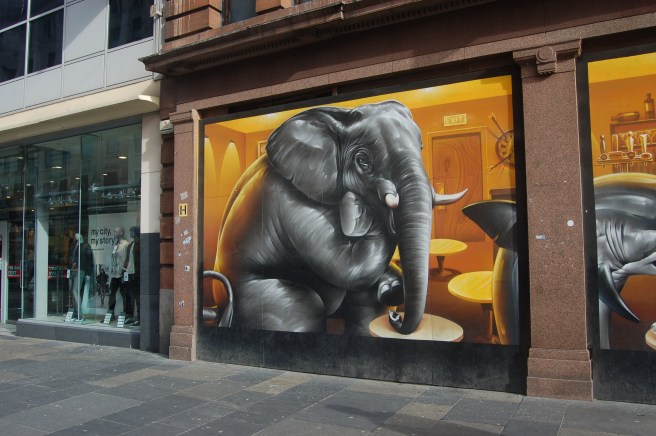
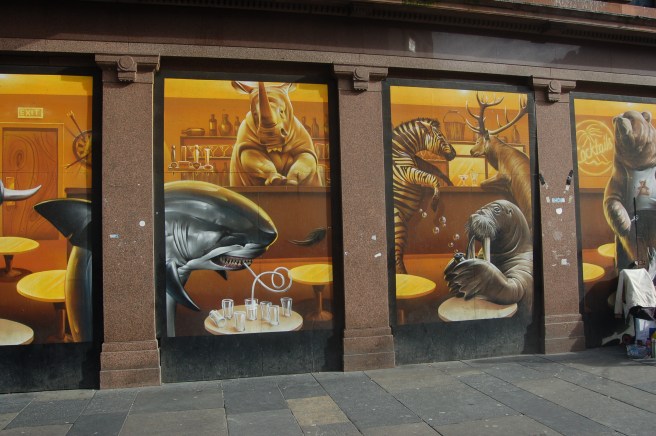
Photo – Argyle Street Café, Glasgow

DSC_0005DSC_0006DSC_0004

Glasgow is a cultural city, full of vibrant murals, and this one on a vacant shopfront in Argyle Street is one of the best. If you’re heading up to Glasgow and you’re a fan of street art too, there’s a city centre mural trail available here: https://peoplemakeglasgow.com/things-to-do/visitor-itineraries/city-centre-mural-trail

Journey Through Time: Dunollie Castle

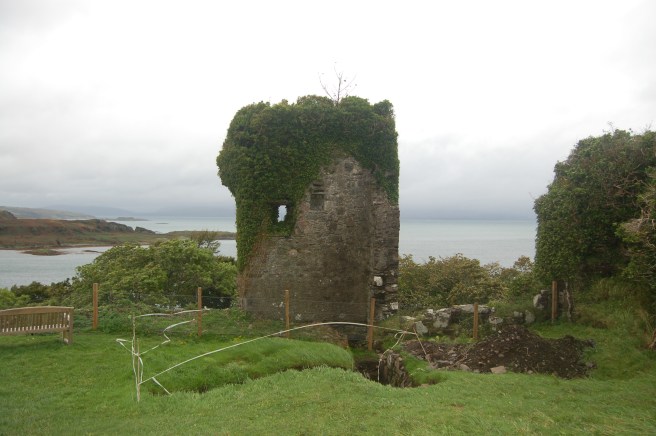
Dunollie Castle, located just north of Oban on Scotland’s west coast, is well situated on a hill that looks out across the town and harbour towards the island of Kerrera. There has been a fortification on the promontory since the Early Middle Ages but it was sacked three times in a space of fifteen years. It was rebuilt around 714 by Selbach mac Ferchair, King of Dalriada and 20th-century research shows it was probably inhabited for around 200 years.

At sometime in the 12th century, Dunollie became part of the Kingdom of the Isles – ruled over by the fearsome warlord Somerled. After his death, it fell to the Clan MacDougall, Lords of Lorne. Initially allied with Haakon IV of Norway, the clan switched allegiance in the mid-13th century to the kings of Scotland.

In the 14th century, John MacDougall sided with the Comyns and the Balliols against Robert the Bruce and defeated him at the Battle of Dalrigh – just six months after Bruce had killed John Comyn in Greyfriars Church, Dumfries. In 1308 Bruce took his revenge and won the Battle of the Pass of Brander – this saw the MacDougalls stripped of their lands. Both Dunollie and the nearby Dunstaffnage were given to Clan Campbell – Dunollie was regained a few years later.

Dunollie was lost again in 1644 when it was captured by the Marquis of Argyll, but it was returned to them in 1661. In 1746, following the second Jacobite rebellion, the MacDougalls abandoned the castle and built Dunollie House downhill. The castle is still owned by the MacDougalls today and is open to the public – the views over Oban Bay are beautiful at the height of summer.DSC_0047.JPG

Days Out: Kimbolton Castle

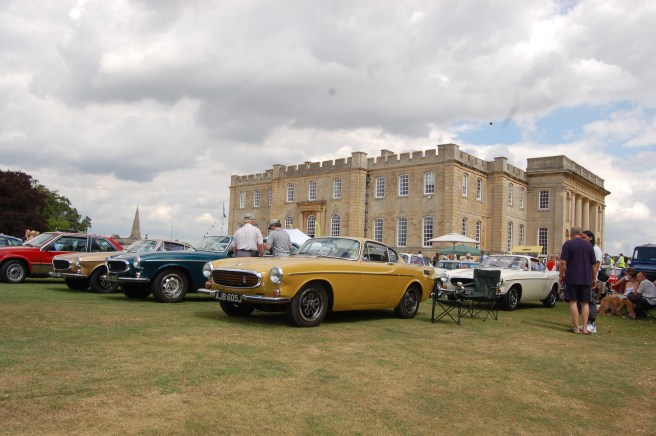
Welcome to the first in a semi-regular series I’ll be showcasing on here of days out I have personally experienced in Britain & Ireland. Today was Kimbolton Country Fayre & Classic Car Show, hosted at Kimbolton Castle in Bedfordshire.

The castle itself isn’t normally open to the public as it is now used as a public school, but what a history it has. The first castle in Kimbolton was a wooden motte and bailey, of which only a low mound remains. Following this, in the 1200s, the first castle on the current site was commissioned by Geoffrey Fitzpiers, Earl of Essex – nothing of this castle survives.

The castle changed hands many times over the ensuing years, but by the 1520s, it had been remodelled as a Tudor manor house under the ownership of the Wingfield family. In May 1534, Katherine of Aragon, first wife of Henry VIII arrived at the castle and was kept here as a semi-prisoner. She died around two years later, and is buried at Peterborough Cathedral.

The next inhabitant of any note was Sir John Popham, who owned the castle around 1600. In his early years he was reportedly a highwayman, but went on to become Lord Chief Justice and was the judge at the trial of Guy Fawkes. Local legend has it that he also threw his baby daughter to her death from a window overlooking the courtyard here.

A mere decade later, the castle came into the hands of the Montagu family – in particular Sir Henry Montagu, who went on to become the 1st Earl of Manchester. His son, Edward Montagu was a high-ranking officer in Oliver Cromwell’s parliamentarian army during the early part of the English Civil War. The castle remained in the possession of the Montagus until 1950 when it was sold by the 10th Earl to become Kimbolton School, after it had served the Royal Army Medical Corps in the Second World War.

Back to present day – the Country Fayre & Car Show itself was a fantastic mix of over 800 classic cars, live music, craft & food stalls, and events in the main ring including heavy horse displays and a civil war re-enactment. The castle is holding an open day on 5th November, and is well-recommended for fans of architecture and stately homes.DSC_0014.JPG

Trench warfare at Stonehenge

Stonehenge is one of the world’s most well-known heritage sites, and dates back thousands of years, but builders recently discovered some more recent history nearby.

A construction force tasked with building new military homes at Larkhill in Wiltshire uncovered a vast system of tunnels and trenches which were used during the First World War for training soldiers before they headed to the Western Front. Over 200 grenades have been found at the site (of which around half were still live!) along other items such as mess tins, and cigarettes.

The site was then investigated by Wessex Archaeology, who had the honour of becoming the first group in the world to examine such a vast WWI training area. Of course, with the hazards posed by live ordnance, they had to work alongside the Ministry of Defence. The archaeologists believe the trenches came first and the tunnels were added in 1915.

Poignant graffiti was also found in the trenches, including two brothers by the name of Halls, who had scratched their names into the wall, along with the Latin phrase “Semper Fidelis” – always faithful.

According to research, training at Larkhill would have been no walk in the park – the soldiers spent weeks on end in these tunnels through the brutal winter of 1916/17 – foodstuffs were also found in the tunnels, including toffee tins, condensed milk and a jar of Canadian cheese.

Alongside the WWI training area, the archaeologists also found a vast amount of prehistoric material, including an enclosure older than Stonehenge and some Iron Age huts that date back to the time of the Roman Invasion of Britain.

Unfortunately, the construction of 400 military homes will continue, and the tunnels will be sealed and pumped full of concrete – lost forever.

Welcome

So a big hello and welcome to my first real attempt at doing a blog of my own. First things first, I’m Charlie – a twenty-something whose interests range from football to history, from photography to music and pretty much everywhere in between. I do write for other blogs – rockchicme.blogspot.co.uk and intermissionsfilms.com – and in the past I’ve done pieces for Football Republik and Late Tackle.

However, I didn’t want my writing to be limited to topics that fit in with other people’s blogs as I feel I have a lot more to offer the digital generation. The blog title? Filling The Void – the most original blog title you’ll come across all year.  By writing this blog I’m filling the evening void and destroying the boredom that sometimes sets in.

Spoiler alert – this blog will contain shameless plugs to other sites – as this is a personal blog, sharing links generally means I do endorse the content of the other site.

Other than that, enjoy your time here… happy reading! Any suggestions for blog posts will be gratefully received and considered.

Ciao

Medieval zombies in Yorkshire?

To many, zombies are an entertaining factor in modern horror films and TV shows – the recently deceased rising from their grave to wreak havoc and create fear. But in certain parts of the world, they are commonplace in folklore, and have been for centuries.

A study conducted by Historic England and the University of Southampton has concluded that residents of the abandoned medieval village of Wharram Percy, in North Yorkshire, mutilated corpses because they feared the rise of the dead.

The archaeologists studied 137 bone samples found in pits in the village – from at least ten adults, teenagers, and children – first excavated in the 1960s (but not extensively studied until now). One early theory for these wounds was that they were bodies of Romano-British settlers and outdated the village, but this has since been proved wrong as the skeletons date from the period between the 11th and 14th century.

The possibility of the bodies being outsiders massacred by the villagers has also been disproved, as Alistair Pike (professor of Archaeological Sciences at the University of Southampton) explains: “Strontium isotopes in teeth reflect the geology on which an individual was living as their teeth formed in childhood. A match between the isotopes in the teeth and the geology around Wharram Percy suggests they grew up in an area close to where they were buried, possibly in the village. This was surprising to us as we first wondered if the unusual treatment of the bodies might relate to their being from further afield rather than local.”

Evidence of cannibalism has been found at English sites where famine was rife, and this could have been the case, but the mutilations should be all over the bodies at the joints, not just around the head.

What we must remember is that the medieval view of the world was very different to how we see it now. Medieval sources indicate that it was believed evil or cursed individuals could rise from their graves and harm the living, or spread disease. Because of this, several “remedies” for preventing the rise of the dead were well-known in medieval times. These included decapitating the corpses or burning the skeletons.

The condition of the skeletons found at Wharram Percy shows the corpses were both decapitated AND burned soon after death. As Simon Mays, a skeletal biologist at Historic England, concludes: “The idea that the Wharram Percy bones are the remains of corpses burnt and dismembered to stop them walking from their graves seems to fit the evidence best. If we are right, then this is the first good archaeological evidence we have for this practice.”

If they are right, what a find this could turn out to be.
P8072105.JPG